Estudios de Caso de Aplicación de Reparación por Superposición
Ejemplos de reparación por superposición en el sitio para moldes, matrices y defectos de fundición, extraídos de los propios registros de campo de TechnoCoat. Cada caso documenta la pieza de trabajo real, el metal base y la aleación de electrodo utilizada, por lo que los resultados son concretos y verificables.
Cada reparación a continuación se basa en el mismo mecanismo de electro-chispa de bajo aporte de calor explicado en el Descripción General de Depósito por Electro-Chispa página: porque se transfiere tan poco calor al metal base, el material de superposición se puede acumular sin la distorsión, el estrés residual o el riesgo de agrietamiento de la soldadura convencional — razón por la cual estas reparaciones se pueden realizar en el sitio, en una matriz o molde terminado, sin desmontarlo.
Molde de formación plástica — eliminación de rebabas en la línea de separación
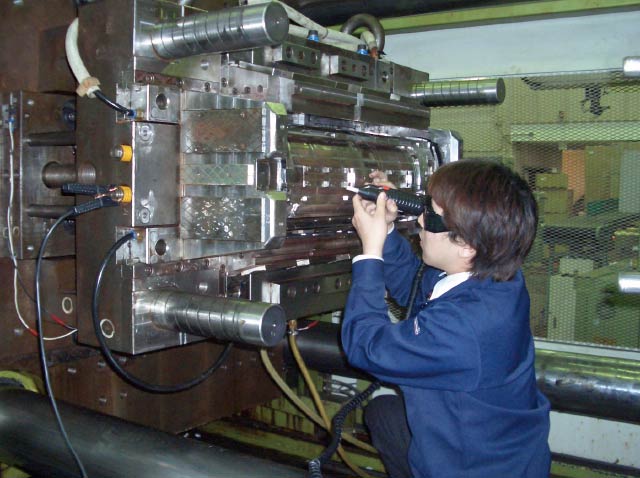
Antes
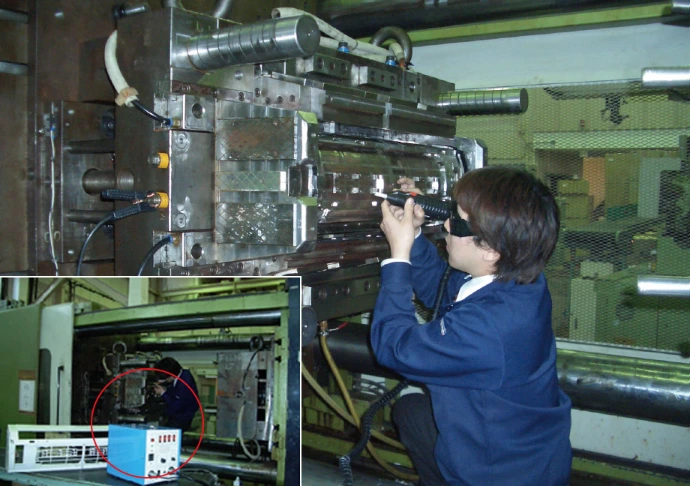
Después
La reparación por superposición en el sitio de la línea de separación en un molde de formación plástica elimina la formación de rebabas y reduce el tiempo de inactividad y el costo de producción al controlar el grosor de la superposición sin distorsión o contracción por bajo aporte de calor.
| Pieza de Trabajo | Molde de formación plástica |
|---|---|
| Objetivo | Eliminar la formación de rebabas |
| Proceso | Superposición |
| Metal base | H13 (NAK) |
| Electrodo | Aleación de níquel |
Bloque de motor de aluminio automotriz — llenado de defectos de fundición
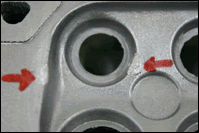
Después
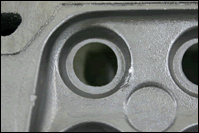
Antes
Superficie de relleno para defectos menores de fundición utilizando electrodos de aleación de aluminio, sin distorsión, contracción o porosidad, gracias a la baja entrada de calor.
| Pieza de Trabajo | Bloque de motor de aluminio automotriz |
|---|---|
| Objetivo | Superficie de relleno de defecto de fundición |
| Proceso | Superficie de relleno |
| Metal base | Aleación de aluminio |
| Electrodo | Aleación de aluminio |
Molde de llanta de aluminio automotriz — reparación de desgaste y heridas
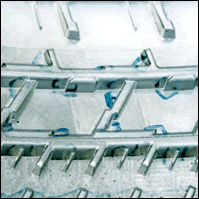
Antes
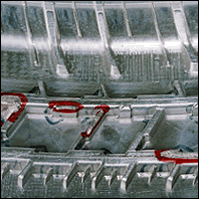
Después
La reparación por superposición de desgaste y heridas en moldes de llanta de aluminio automotriz evita los problemas de otros métodos de soldadura, como distorsión, contracción y fusión de áreas circundantes.
| Pieza de Trabajo | Molde de llanta de aluminio automotriz |
|---|---|
| Objetivo | Reparación por superposición de desgaste y heridas |
| Proceso | Superposición |
| Metal base | Aleación de aluminio |
| Electrodo | Aleación de aluminio |
Molde de formación de plástico automotriz — superposición de acabado
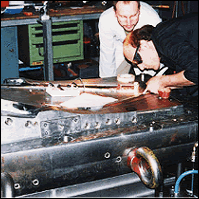
Antes
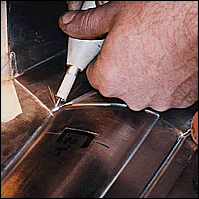
Después
La superposición en moldes de formación de plástico de partes automotrices terminadas resuelve problemas típicos de la soldadura de argón — cortes, endurecimiento y agujeros de alfiler — mientras reduce el tiempo de acabado.
| Pieza de Trabajo | Molde de formación de partes automotrices |
|---|---|
| Objetivo | Reparación por superposición para molde de formación de plástico terminado |
| Proceso | Superposición |
| Metal base | H13 |
| Electrodo | Aleación de níquel |
Superposición delgada en parte de radio ancho
Superposición aplicada en una parte de radio ancho del molde: 0.05mm de grosor, 5.0mm de ancho, 80mm de largo — demostrando el control del proceso sobre el grosor de la superposición en geometría de radio ancho y poco profundo.
Superposición en el punto profundo
Superposición aplicada en un punto profundo del molde: ancho de puerta de 25 mm, profundidad de superposición de 20 mm, forma 3R — demostrando la acumulación de superposición en una característica estrecha y profunda sin distorsión.
Troquel de prensado — reparación de cromado
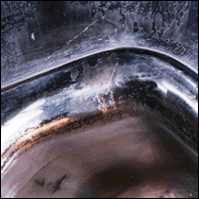
Antes
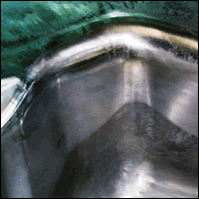
Después
Reparación de superposición y recubrimiento por desgaste y rayado del cromado en un troquel de prensado. Logra reparaciones finas de superposición sin distorsión, grietas, agujeros de alfiler o contracción — el recromado es innecesario gracias al recubrimiento de carburo de tungsteno.
| Pieza de Trabajo | Troquel de prensado |
|---|---|
| Objetivo | Reparación de superposición y recubrimiento de cromado desgastado/rayado |
| Proceso | Superposición y recubrimiento |
| Metal base | Hierro fundido (FCD) |
| Electrodo | Aleación de níquel + carburo de tungsteno |
Rueda de aluminio fundido — reparación de defecto menor
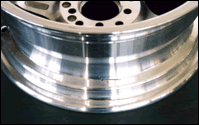
Antes
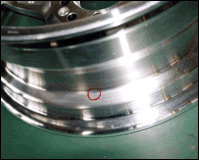
Después
Los defectos menores de fundición encontrados en ruedas de aluminio fundido después del acabado pueden ser rellenados por reparación de superposición. La baja entrada de calor reduce los defectos de producción y elimina la distorsión, el estrés residual o los subcortes — los productos reparados también han pasado pruebas de fugas hidráulicas.
| Pieza de Trabajo | Rueda de aluminio fundido |
|---|---|
| Objetivo | Reducir la producción defectuosa a través de la reparación de defectos menores de fundición |
| Proceso | Superposición |
| Metal base | Aleación de aluminio |
| Electrodo | Aleación de aluminio |
Ver casos de estudio aplicación de recubrimiento, o regresar a la Descripción general de SparkDepo y índice de recursos.