Coating for Preventive Maintenance
Electro-spark deposition coating demo and technical data for aluminum die casting dies.
Erosion by molten aluminum, abrasion damage and heat checks in aluminum die casting dies are common problems. The damage can be reduced dramatically by applying tungsten and/or titanium carbide in the problem-prone areas of new or repaired dies using the electro-spark process. The coating protects the die surface due to its extremely high anti-wetting property against molten aluminum and maintains high hardness at operating temperatures. The coating minimizes erosion, scoring and heat checks and extends the die life. As an added benefit the coating increases product quality by providing excellent release properties, liquid flow and gas release.
Before / after by problem type
1. Wearing PreventionBefore: Molten Al flows rapidly into die. Fraction occurs and wearing is in progress on the surface of the die. After: Against hardness 350-400 HMV die, the coating layer applied with Cermet electrodes (hardness > 2000 HMV) extremely protects the die surface. |
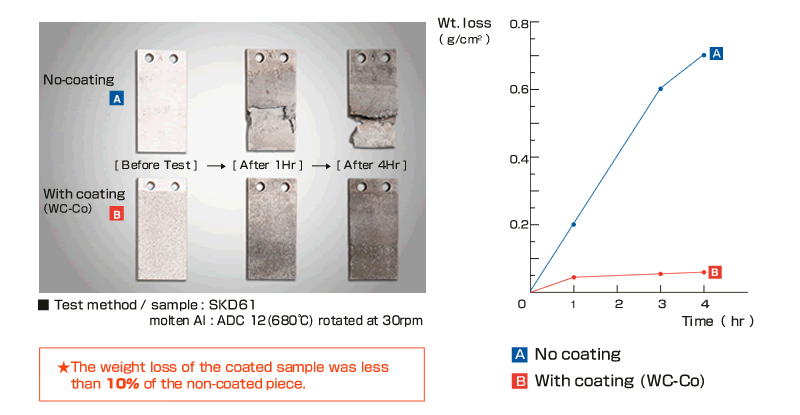
2. Erosion PreventionBefore: Die surface erosion occurs on contact with high-temperature molten Al. After: Erosion amount is reduced to within 1/10 from die surface by the coating's poor wettability material. (See Erosion Test Data below.) |
3. Seizing and Scuffing PreventionBefore: Molten Al and the die surface react easily, causing seizing and scuffing at the contact area. After: Prevented by the coating's poor-wettability reaction against molten Al. (See Wettability / Contact Angle below.) |
4. Heat Cracks PreventionBefore: Repeated heating (molten Al) and cooling (die lubricant) accumulates stress in the die surface, causing heat cracks. After: Insulation effects of intercalated minute air in the coating's slight surface roughness (tongued and grooved face) controls expanding and shrinking, preventing heat cracks. |
5. Maintain Liquid Flow and Underfill PreventionBefore: Underfill occurs when molten Al contacts a cooled die surface and loses liquid flow. After: The coating's insulation effects keep liquid temperature and flow, preventing underfill. |
6. Control Flow Direction and Liquid Flow Line PreventionBefore: Liquid flows along die design and flow lines occur at cold shut. After: Coating with a controlled degree of surface roughness at the cold shut controls flow direction uniformly, preventing flow lines caused by turbulence. |
SparkDepo Coating Technical Data
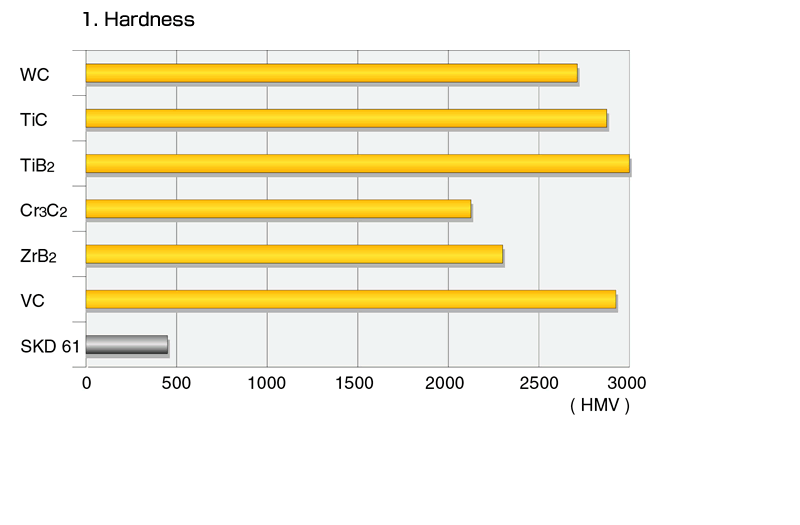
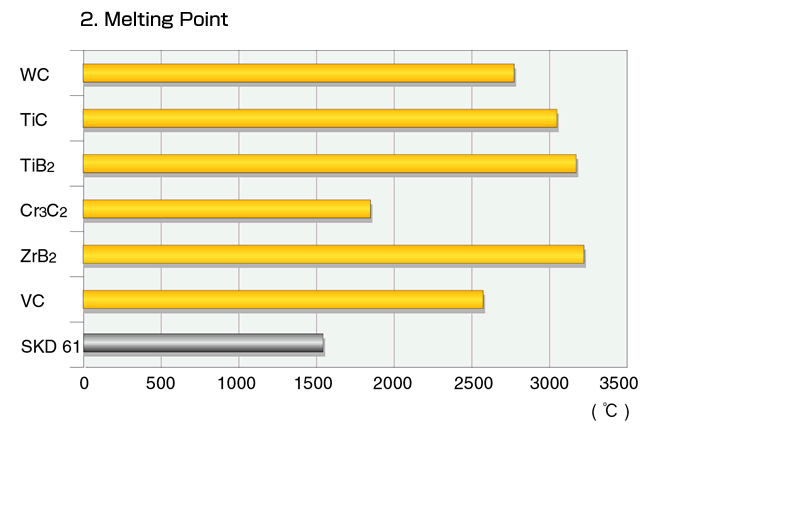
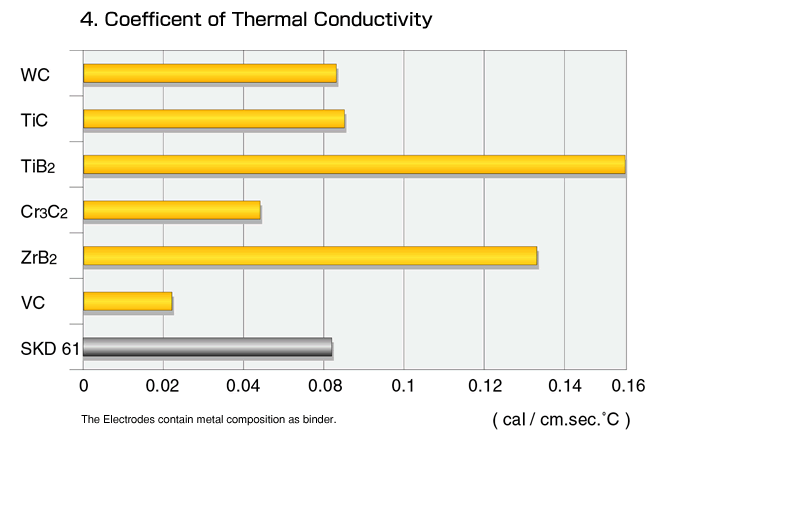
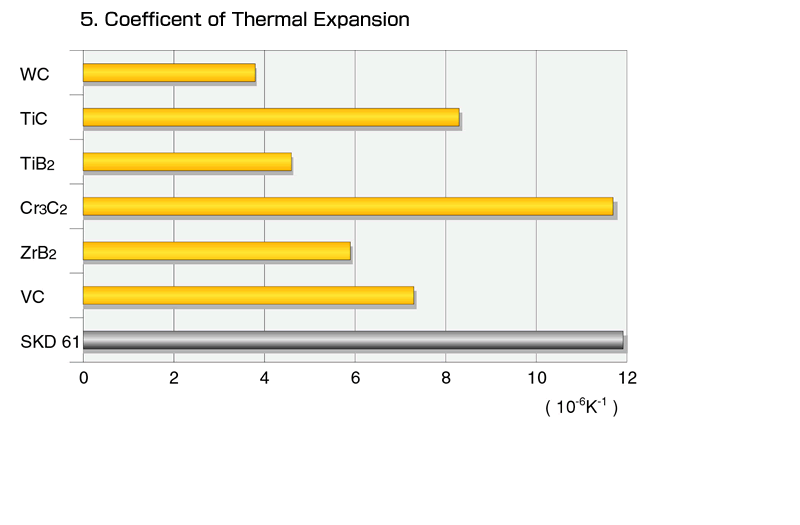
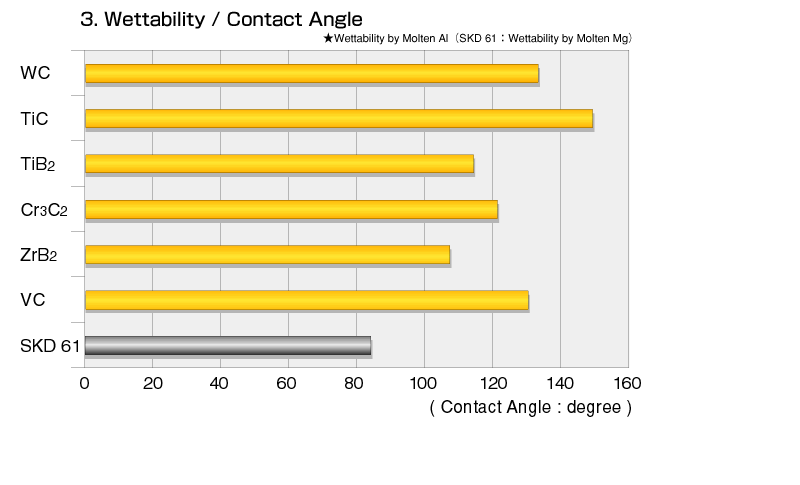
The chart below compares key physical properties of the electrode materials used with the SparkDepo/MicroDepo electro-spark deposition process (WC, TiC, TiB2, Cr3C2, ZrB2, VC) against SKD-61, the tool steel typically used for aluminum die casting dies. Choosing the right electrode chemistry for a given failure mode (wear, erosion, scuffing, or heat cracking) is what determines coating performance.
Hardness
Tungsten carbide (WC) reaches roughly 2,000 HV, several times harder than SKD-61 die steel. This extra surface hardness is what resists abrasive wear and scuffing from repeated die-casting cycles.
Melting point
WC melts around 2,867 °C and TiC around 3,140 °C, far above the ~660 °C melting point of the molten aluminum being cast. This large margin keeps the coating solid and stable during repeated contact with molten metal.
Thermal conductivity
Electrode chemistry affects how quickly heat is carried away from the coated surface during each casting cycle. Lower, more controlled thermal conductivity helps even out the repeated heating/cooling that causes heat checking.
Thermal expansion
A coefficient of thermal expansion closer to the SKD-61 base metal reduces the stress built up as the die repeatedly heats and cools, which is a direct driver of heat-crack formation (see "Heat Cracks Prevention" above).
Wettability / contact angle
Contact angle of adhesive dropped onto a material indicates the material's wettability - the lower the contact angle, the more wettable the surface. TechnoCoat's coating procedure on casting dies improves wettability by Al or Mg liquid, achieving better liquid flow, gas release, and adhesion of release agents, while preventing erosion, scuffing, and heat cracks.
Erosion test data
Erosion resistance was measured by rotating an SKD-61 test sample in molten aluminum (ADC12 alloy) at 680 °C at 30 rpm, comparing weight loss after 1 and 4 hours against an uncoated sample. The WC-Co coated sample's weight loss after the full test was less than 10% of the uncoated sample's, confirming the coating's erosion resistance under realistic die-casting conditions.
Coating condition (sample process)
| Model | SparkDepo Model 300 |
|---|---|
| Applicator | Miniature Applicator |
| Electrode | WTC-90-H, dia. 4.0 x 100mm |
| Base Metal | SKD-61 |
Overlay repair (reducing defective products)
The minor casting defects found on casting aluminum wheels after finishing can be filled by overlay repairing. These works, with low heat input, have achieved reduction of production defects and eliminated distortion, residual stress, or under-cuts. The repaired products have also passed hydraulic leak tests.
Step-by-step simulation videos and technical illustration images for this product are listed on the Videos page.